
Relay for auxiliary lights and vehicle lighting
A relay is a crucial component when installing auxiliary lights, an LED light bar, or other high-power vehicle lighting. It allows you to control high current using a low control signal, for example from the vehicle’s high beam, without overloading the original electrical system. The result is a safe, stable, and professional installation.In our range you will find 4-pin and 5-pin relays in various amperage ratings – typically 30A, 40A, and more heavy-duty options for demanding installations. Whether you are installing a single auxiliary light or multiple high-output lamps, it is important to choose the correct relay based on total power consumption, cable size, and fuse rating.
A properly sized relay protects both the vehicle’s electrical system and your lighting equipment. For most LED auxiliary lights, a 40A relay is sufficient, but for higher power setups or multiple light sources, a higher-rated solution may be recommended.
Need help calculating the correct size? Check the total wattage of your lights, divide by 12V to determine the amperage, and select a relay with a suitable safety margin. This ensures a reliable and durable installation over time.
Always use a relay when installing auxiliary lights.
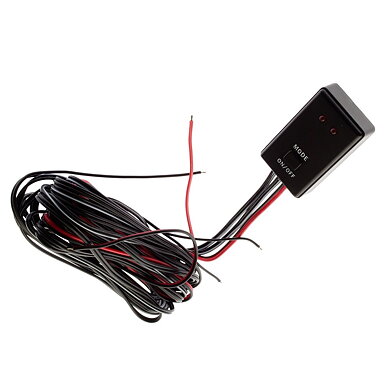
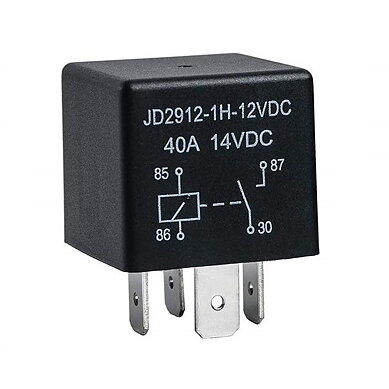

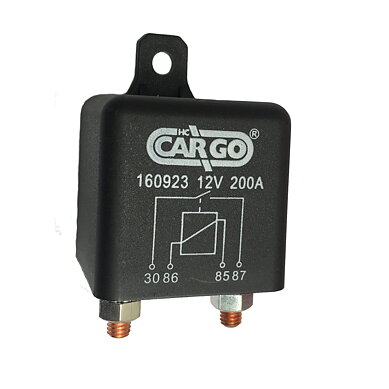
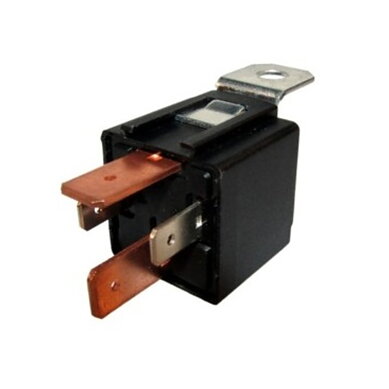

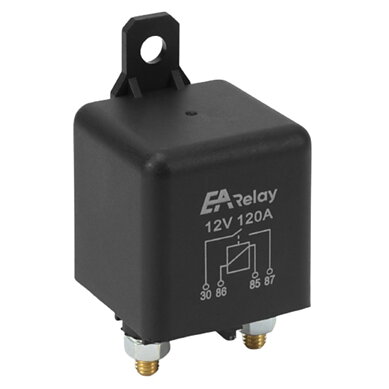
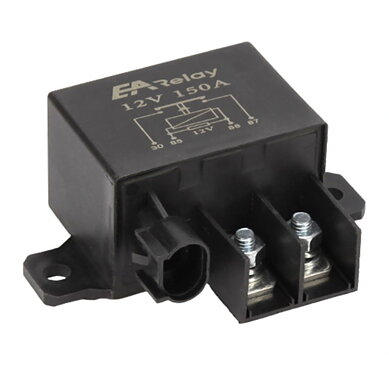
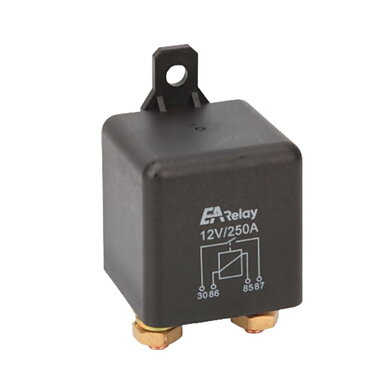

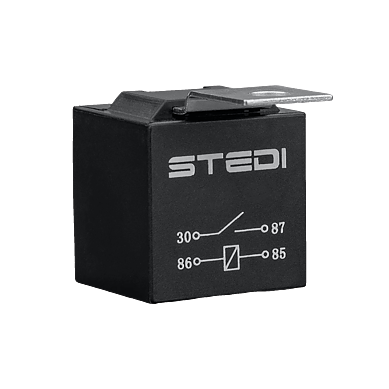


What relay should you use for auxiliary lights?
Auxiliary lights are normally installed using a 12V 4-pin relay (30/85/86/87) rated at 30A or 40A. For most LED auxiliary lights, 30A is sufficient, but for higher power setups or multiple lights, a 40A relay is recommended. The fuse rating and cable size must always be matched to the total power consumption.What is terminal 87 on a relay?
87 is the outgoing positive connection from the relay to the auxiliary light. When the relay is activated, power is switched from terminal 30 to 87. Terminal 30 is the incoming power supply, and 87 is the output to the load.How powerful a relay is needed for auxiliary lights?
It depends on the total wattage. Calculate it like this: total watts divided by 12V = amperes. Example: 2 auxiliary lights at 60W each = 120W. 120W / 12V ≈ 10A. In this case, a 30A relay is more than sufficient. For higher power or multiple lights, 40A or more is recommended.How do you know which relay to choose?
Add up the total wattage. Divide by 12V to get the amperage. Choose a relay rated at least 30–50% higher than the calculated load. For most LED auxiliary lights, a 40A relay is a safe choice.What does terminal 30 mean on a relay?
30 is the incoming positive supply directly from the battery. It is the main power feed that is connected to terminal 87 when the relay is activated.How many watts can a 40A relay handle?
In a 12V system: 40A × 12V = 480W. A 40A relay can theoretically handle approximately 480 watts. For long-term reliability, you should not run it continuously at maximum capacity.How do I know what size relay I need?
Up to around 300W total load, a 30A relay is usually sufficient. Between 300–450W, a 40A relay is recommended. Above 450W, dual relays may be appropriate. Also consider inrush current, which can be higher than the rated operating current.How many relays are needed for 3 auxiliary lights?
In most cases, one 40A relay is sufficient if the total load is within its capacity. Example: 3 × 50W = 150W, which equals approximately 12–13A. One relay is more than enough. For higher-powered lights, you may divide them across two relays.Can I use a relay with a higher amp rating?
Yes, using a relay with a higher amp rating than required is not a problem. It provides additional safety margin. The important thing is that the fuse is correctly sized.What do the numbers on a relay mean?
The standard numbering is: 30 = battery positive (power supply), 87 = output to auxiliary lights, 85 = ground or control signal, 86 = control voltage (for example from the high beam). This numbering follows the international DIN standard.What is the difference between 4-pin and 5-pin relays?
The difference is that a 5-pin relay has an additional terminal, allowing more switching options.4-pin relay (30/85/86/87)
A 4-pin relay has four terminals:- 30 = Battery + (power supply)
- 87 = Output to load (e.g., auxiliary lights)
- 85 = Ground or control signal
- 86 = Control voltage
5-pin relay (30/85/86/87/87a)
A 5-pin relay includes an additional terminal: 87a.- 87a = Normally Closed (NC) contact
Which one should you choose for auxiliary lights?
For auxiliary lights, a 4-pin relay is almost always used, since you simply need to switch power on and off. A 5-pin relay can also be used, but terminal 87a is typically left unused.In short:
4-pin = simplest and most common for auxiliary lights
5-pin = used when switching between two circuits
Are there relays rated above 40A?
Yes, there are relays and relay solutions rated well above 40A.Types of higher-capacity relays
- 60A–80A relays – common for more powerful or multiple auxiliary lights
- 100A–500A relays – often used for large auxiliary light setups or very high current applications
When do you need a higher amp relay?
You should consider higher-capacity relays when:- The total load exceeds what a 40A relay can handle
- You are connecting multiple auxiliary lights or high-current equipment
- You have accessories that draw significant power (e.g., winches, compressors)
- You want additional safety margin for long-term durability
Practical considerations
- The relay’s rated current must exceed the calculated load
- Cable size and fuse rating must also be properly matched